
The Ageing Process
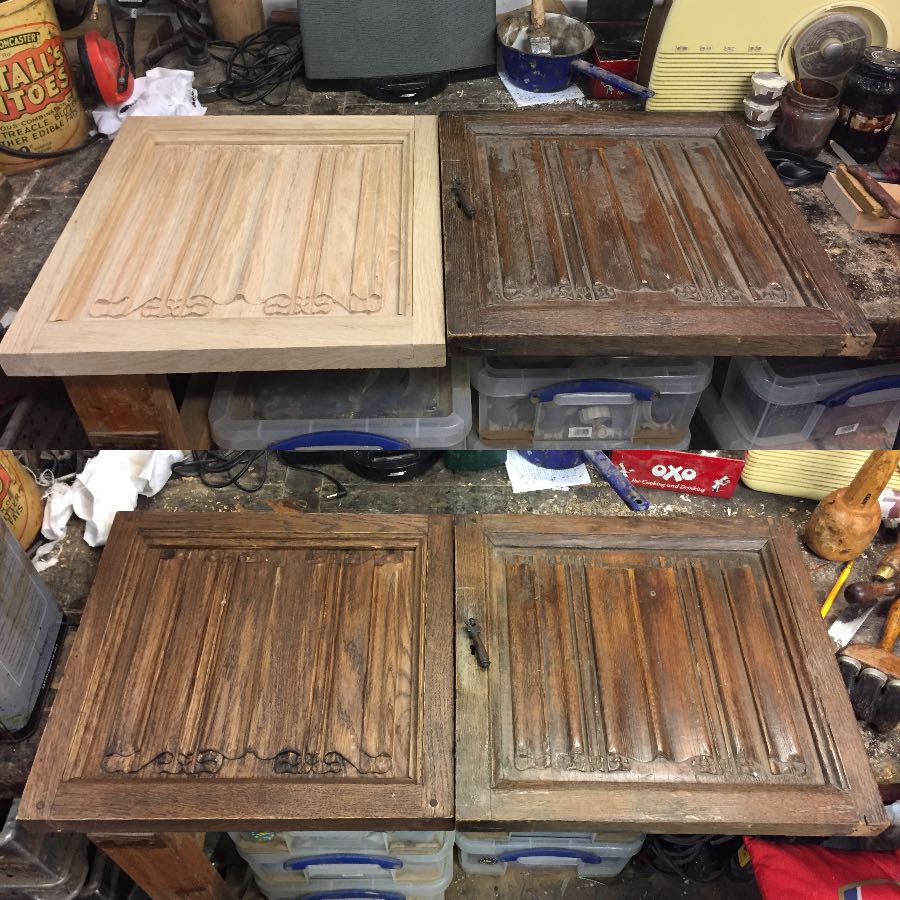
Occasionally there comes a point in a restoration project where causing surface-level damage is, strange though it may seem, desirable. Our primary goal as furniture restorers is rarely to make something look brand new (unless we receive a specific request), but rather to disguise our work so that it’s as un-intrusive to the original look of the item as possible. In this case, the door to a large, 17th century hall cupboard, tucked away in a hidden room within Fortnum & Mason, had vanished into thin air. We were tasked with manufacturing a replacement; no mean feat, given the linen-fold carving, and made trickier by the necessity of realistically ageing it by 350 years or so…This was achieved through judicious use of hammers and chisels to scar it, stains and pigments to colour it and a liberal application of dust, rubbed into the grain many times over.