
Chair Caning
The dying art of a traditional, time-honoured technique
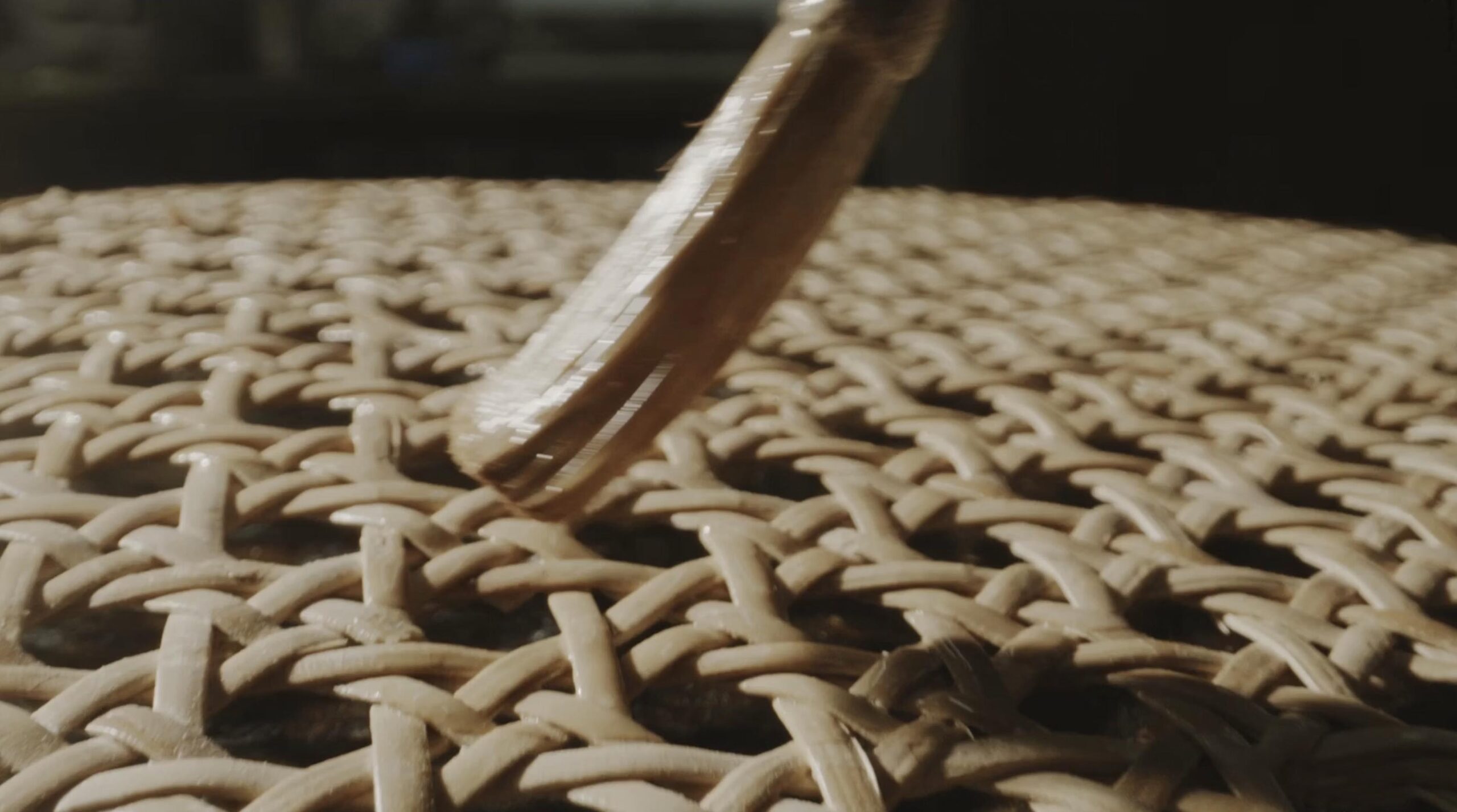
Which technique and how to calculate the cost
There are two main types of cane – ready-woven (sometimes known as sheet caning) which comes on a roll and is glued into your chair seat or back, and hand woven cane, which is threaded, as the name suggests, by hand, through the holes around the edge of the seat frame or other area that needs caning. You cannot choose which method to use; it’s based on how your piece was originally manufactured.
To calculate the cost of your seat or other panel, simply count the holes around the edge of the frame – not the holes that the pattern of the cane makes – just the drilled holes around the edge through which the cane is threaded. The dimensions of the seat or other panel are not relevant. Once you’ve ascertained how many holes there are, let us know and we’ll give a precise price.
nB. For Bergére chairs and sofas, the sides and back can sometimes share holes – which can mean that although only an arm may be damaged, it might be impossible to recane without also doing the back and other arm. This isn’t always the case, but it’s as well to bear in mind.
There is also a technique known as ‘blind’ caning which means that the holes are not drilled completely through the frame – in this case, the cost per hole increases a little.
If your chair has a medallion in the centre of the back panel, then this is a little trickier to carry out. You need to count the holes around the medallion, as well as those around the outer frame of the chair and them together.
If you would like your newly caned seat or panel to look a little less new and better blend with other, original areas, we can do this for a small additional charge.
Several other things to bear in mind…
Occasionally, when the old cane is removed, we find that it was the cane that was actually holding the frame together. In this case, some remedial repair work will be necessary before the recaning can be carried out. We will then make a charge to dismantle, reglue and reassemble the frame. If any joints are actually broken, this can add to the cost. Caning puts a huge amount of stress on the frame and the joints need to be strong and firmly glued before we can proceed.
Our caner, based out in the sticks, comes to London once a month or 6 weeks to collect any work that needs doing. That means that if we have your chair in our workshop coinciding with his visit, the turn around time is usually about month or so. However, if he’s recently visited us the lead time will be longer, for obvious reasons.
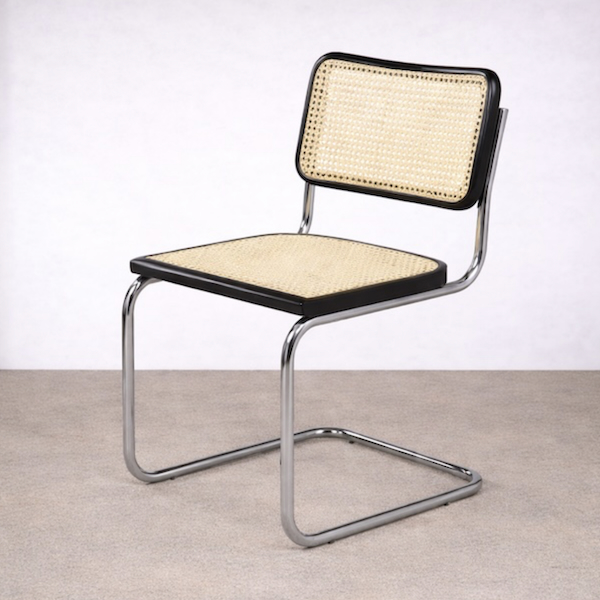
For Breuer-style cantilever chairs of the type pictured below, we only require the seat or back that you’d like to have caned, not the complete frame. They are removable from the frames by unscrewing the 4 retaining screws.




Frances Gibbons – 11/11/20
Just wanted to let you know that I am delighted with the re-caned chair collected from you on Friday. The finish is far superior to the original that was ‘nailed’ round the edge etc. Really exceeded expectation. Please let your caner know that his excellent craftsmanship is appreciated.
Caning hereA brief history of caning
The technique of weaving cane together to form a decorative patterned panel has been used for thousands of years. Weaving cane as a method of chair seating was first introduced into England during the second half of the 17th century. It has been dated as far back as ancient China and archeologists have discovered caned chairs in Egyptian tombs dating to 1300 B.C.
Caning is a method of weaving and is most commonly applied to chair seats and backs, though can be applied decoratively to panels, bedheads, etc. Cane used for furniture is derived from the rattanvine native to Indonesia, the Philippines and Malaysia. The vines typically grow to 100–300 ft in length; most have a diameter less than 1 in.[1]:7 Before export, the rattan stems are cut to uniform lengths and the bark is removed in narrow strips of 1⁄16 to 3⁄16 in. Rattan vine is similar looking to bamboo, but differs in that bamboo is hollow and holds itself upright while rattan is a solid flexible vine that needs the support of surrounding structure to elevate itself off the forest floor.
People often confuse chair caning with wicker. To differentiate, chair caning is specifically the craft of applying rattan cane or rattan peel to a piece of furniture, whereas wicker or wicker work is a reference to the craft of weaving any number of materials, willow being the most common – into items such as baskets and conservatory chairs.