
French Polishing
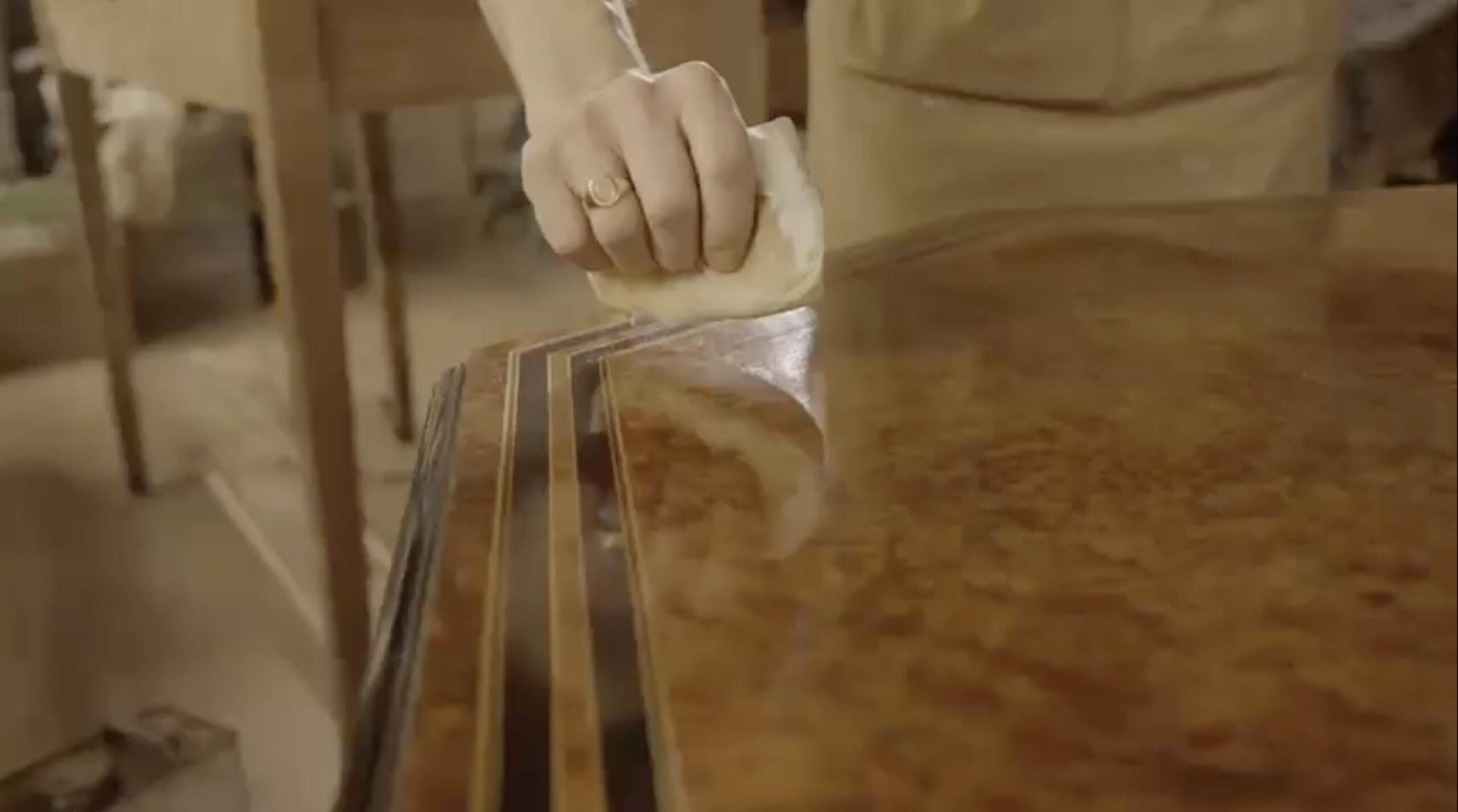
French polishing; a time-honoured technique
French polishing is a wood finishing technique which originated in the late 1700s and which results in a surface with a beautiful sheen and a deep, rich colour. French polishing is extremely labour intensive and takes many days (sometimes weeks) to achieve a satisfactory finish. It consists of applying
many thin coats of shellac dissolved in alcohol using a rubbing pad, lubricated with oil. The rubbing pad is made up of absorbent cotton or wool cloth wadding inside a square piece of fabric (usually soft cotton cloth) and is commonly referred to as a fad or rubber.
“French polish” is a process, not a material. The main material is shellac (a secretion from the Lac beetle), although there are several other
shellac-based finishes, not all of which class as French polishing.
It is considered to be one of the most beautiful ways to finish highly figured wood, but it is also recognised to be less durable than some other finishes.
It is softer than modern varnishes and lacquers and is quite sensitive to spills of water or alcohol, which often produce white cloudy marks. However, it is more forgiving to work with and worn polish may sometimes be cleaned and improved, rather than stripped – which most modern finishes require if
aged or damaged.




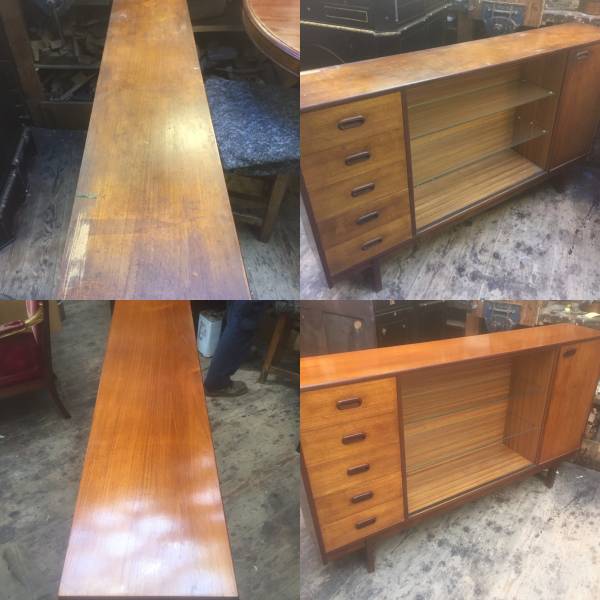
Before and after…
The process of cleaning, reviving, polishing and waxing timber is one of the more satisfying elements of the work we carry out. Something that for so many years may have been neglected, mistreated or ignored by its former owner can be brought back to life with a little care and attention. With sensitive handling, the process enhances the grain, highlights and deepens the natural colour of the wood and preserves the natural patination that has accumulated over time and is frequently the aspect of restoration that has the most impressive before-and-after effect.