
Woodcarving
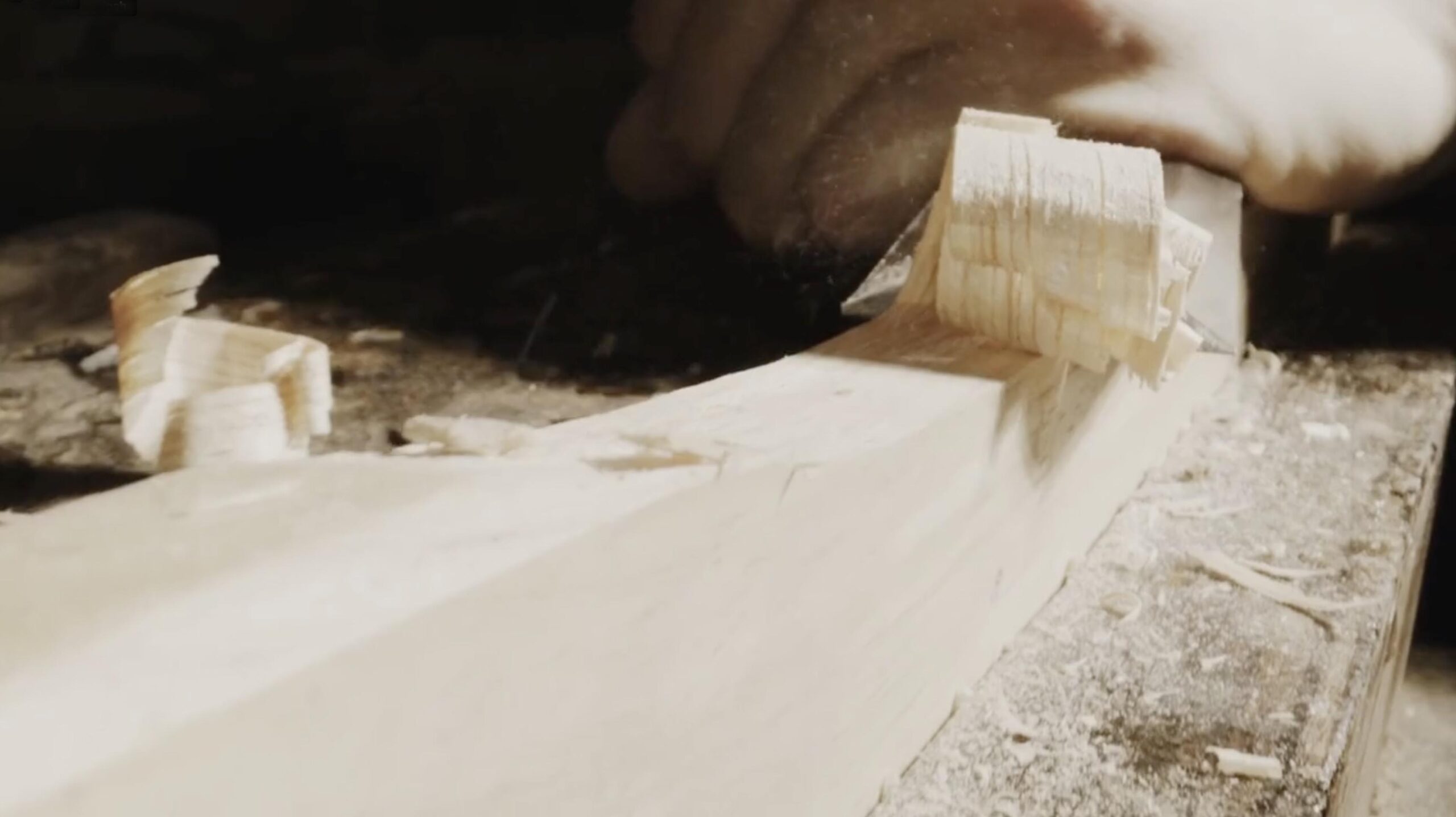
Hand carving in our own workshop
For a free, no-obligation estimate, please email us at [email protected]
Woodcarving is amongst the more artistic of restoration practices – which we carry out using a set of very old carving chisels that used to belong to my grandfather, along with many others gathered over decades.
Commonly carried out in lime, because of its almost grainless composition, we are practiced at replacing small and large areas of missing or damaged carving to anything from picture frames to paneled doors and can do so in any of a variety of timbers.
We do, of course, use the closest appropriate timber to match what we’re restoring and as always, try to use old timber salvaged from other pieces of furniture that we’ve squirrelled away over the years.
The Wood Carving Process
The nature of the wood being carved limits the scope of the carver in that wood is not equally strong in all directions: it is an anisotropic material. It is best wherever possible to carve with the grain and so when planning a carving, it’s always best to arrange the areas of it that are most delicate and likely to break to flow in line with the grain.
The two most common timbers used for carving are lime and tupelo, both of which are hardwoods with tight, bland grain making them easy to work. Chestnut, oak, walnut, mahogany and teak are most commonly to be found in furniture carvings, whilst the finest work is often to be carried out in maple, apple, pear, box, plum and sycamore. Carving that is going to be used as the base of a gilded frame is usually made from pine as it’s soft and inexpensive and will be covered with gesso.




Melissa Ridpath – 16th January 2021
We had our walnut 4 poster bed shipped all the way from the US. It’s been in our family since at least the 1850s and when it was unpacked, I nearly cried to see how much of the carving had been smashed off or was missing altogether. After Noah put it back together piece-by-piece and with patience, skill and care and I can’t thank them enough.